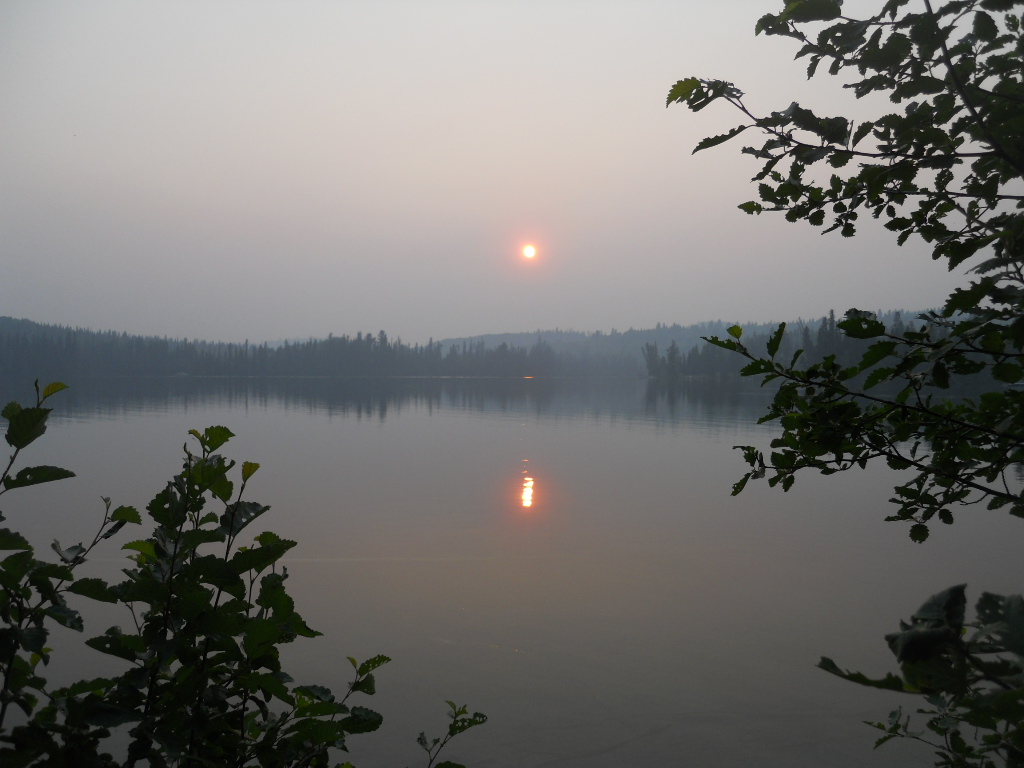
Lac des Roches air quality was significantly impacted by the forest fire smoke that blanketed the Cariboo in mid July. While many residents wisely stayed indoors and mitigated their own discomfort from the heavy smoke, several boaters took advantage of the still evenings on the water to enjoy some spectacular rare sights of eerie sunsets. Here are a few pictures taken between July 16 and 19 when the smoke was at its thickest.
Smokey sunset over Lac des RochesSmoke filtered sunset
Residents may have noticed the heavy equipment working early this summer in the gravel pit south of the Wavey Lake Road interchange. Considerable logging and excavating in the east side of the existing pit has unearthed a significant amount of gravel to be used for highway maintenance throughout the South Cariboo.
Although many residents have observed a noticeable decrease in the local ground squirrel population this summer, there are obviously enough vermin around to keep several badgers fed. Regular sightings of badgers around the lake and near the highway are proof that they are still here. One yard along Boultbee Road houses two fresh badger holes, with at least one resident badger. Ground squirrels usually den up very early for winter, and sightings beyond the end of August are rare however the lush grass this year from the mid-summer rain may keep them, and their key predator – the badger, active a little bit longer into early Fall.
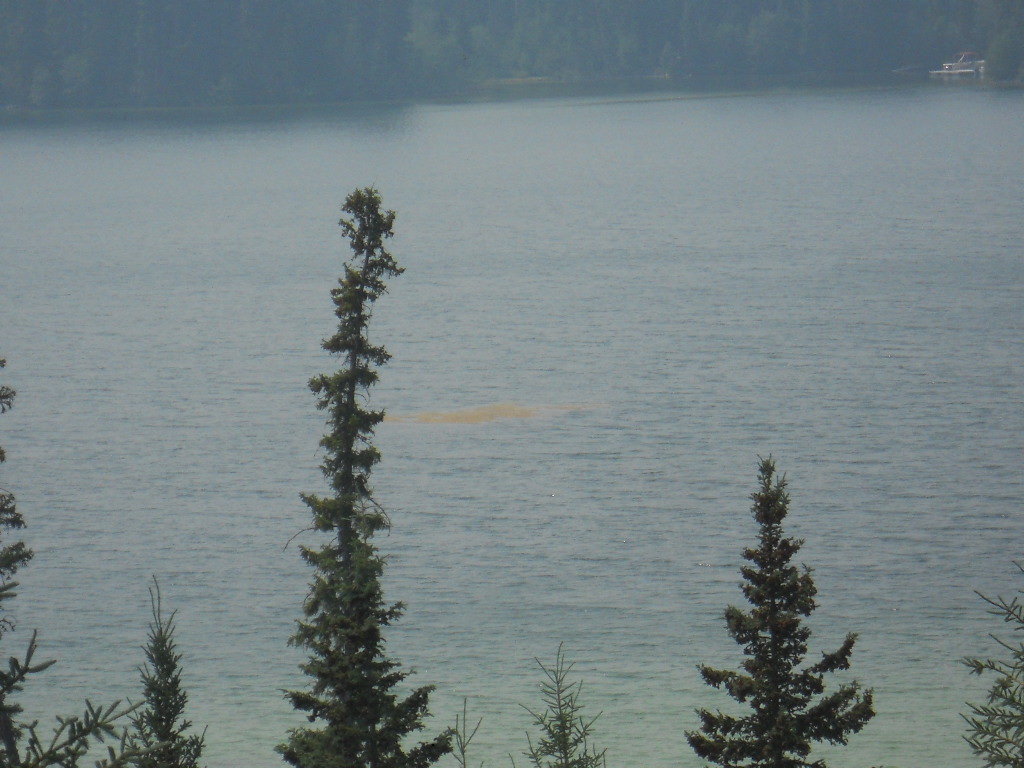
In the heat of July, Lac des Roches typically experiences a rapid growth of algae from the nutrients in the lake, both natural and man-made. This algal bloom is pushed around the lake by the shifting winds and will typically find its way into shallow waters where it hangs up on surface objects such as weeds or snags. Although the algae itself is harmless, it will attract impurities and floating “stuff” on the water such as; dead insects, critter sheddings and vegetation pollen, all contributing to the algae’s unpleasant odor. Some residents are forced to harvest this thick blanket of bloom from their shoreline in order to access the water as it can impede the use of paddles and propellers. The algae can be effectively scooped from the surface of the water with an inverted leaf rake. Letting the water drain from the algae for several hours make it easier to handle for disposal or landfill. Plastic milk crate type bins, full of holes, are a perfect holding container for water-soaked algae to drain from. In the center of the picture below is a dark brown patch, a large piece of algal bloom blown out of the shallow bay at the Access #7 boat launch. Cooler temperatures and winter’s ice kills the bloom every year, but it reappears every summer now with the high level of nutrients in the lake.
To the surprise of many residents, several herons have been seen sitting high atop the spruce trees that line the shores of several waterfront properties. Herons are more commonly observed looming in the shadows of the spruce trees, wading in the shallow bays or near creek outlets. While herons often appear awkward in flight, they provide quite a show, flapping their wings to keep their balance, when they land on small branches which barely hold their massive weight. Boaters on the lake have a wonderful vantage point to observe the abundant waterfowl and other birds and critters attracted to the water.
The aspen trees around Lac des Roches are silver once again, an unmistakable indication of infestation by the leaf miner. On close examination of the leaves, one sees that where the critter travels through each leaf is the absence of the green chlorophyll. Affected leaves do not grow to full size and are considerably smaller than a healthy leaf. Often, every leaf on a tree is affected however there are some young aspen trees that are tipped with full-sized healthy leaves which is a rare sight. Years of this infestation eventually kills the tree and many residents are anxious to remove aspen from around their homes and other structures.
Cat finds refuge among greenhouse cucumbersMule deer enjoy many popular garden plants
Many residents enjoy hobby gardening of flower and vegetable gardens. The many challenges include nibbling and stomping of vegetables and flowers by the deer and various vermin. Changing and unpredictable weather is always a factor but usually frost is not an issue during July and August. One resident finds watering his greenhouse plants a particular challenge since his cat has discovered the joy of warm sun on her back and cool soil on her tummy amid his cucumber plants.
Once again, there was a truck accident on curvy hill near the approach for the resort on Little Lac des Roches. Many residents know this stretch of Highway 24 as “Angus Hill”, named after a member of the pioneering MacDonald family. This eastbound tractor trailer was carrying a load of plywood. After crossing the oncoming lane and bouncing off the no-post barriers part way down the hill, the truck toppled at the very bottom of the hill, blocking the road with both the rig and the strewn wood. The road was blocked for several hours in the early afternoon before residents and travellers were able to resume their highway travel. Luckily, there was no serious injury reported from this incident. Since previous accidents on this hill, most notably the load of cattle a few years ago, the recommended speed on this hilly corner of the highway has been well-marked eastbound, with a reduced speed of 70 km/h, often ignored by many drivers.
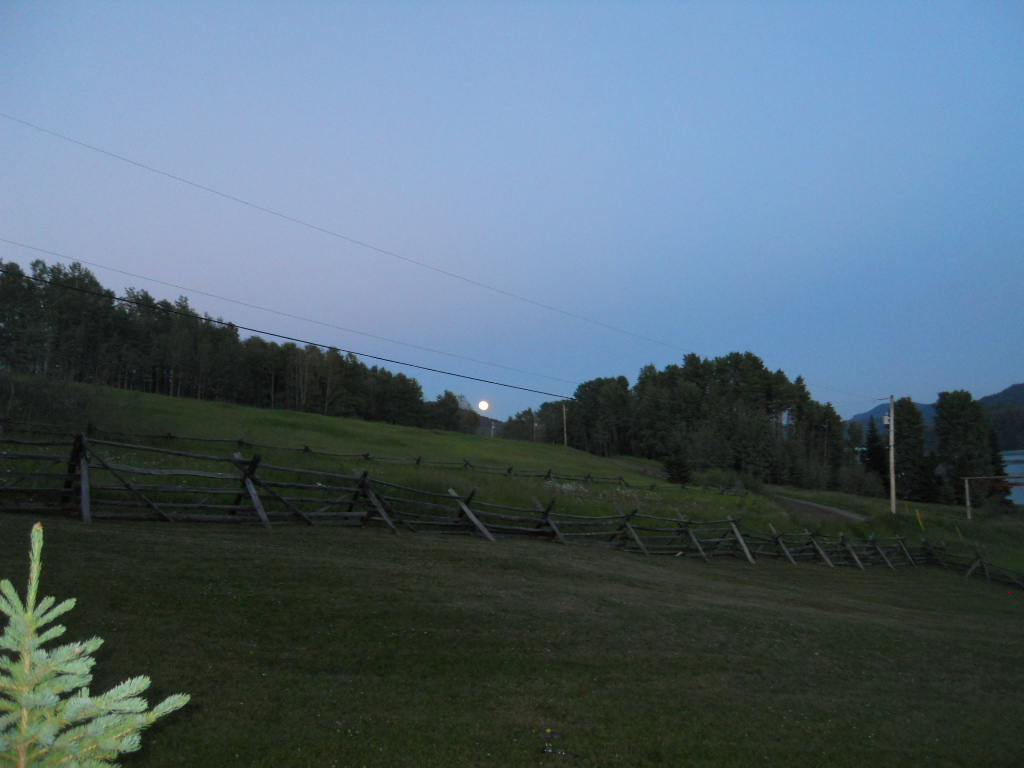
On July 12, the sky over the South Cariboo was perfectly clear and provided an excellent backdrop to the spectacular supermoon full moon. Several residents took advantage of calm waters to watch the moon from their boats cruising along the north shore of beautiful Lac des Roches, well into the dark hours.
A Boultbee Road resident captured a robin emerging from its shell in the nest on his patio. The sky around Lac des Roches is filled with demanding chicks, the loudest being the hungry baby crows. Eagles and hawks seem to be the predominant predators although humans and family pets can certainly cause havoc with the young families inhabiting the area. Fawns temporarily placed by their mothers in the protective tall grass growing abundantly in our neighbourhoods can surprise even the most cautious resident. A Boultbee Road resident recently rescued a frightened fawn attempting to swim across the lake after being spooked by a resident dog. While our backyards are acting as wildlife nurseries, we must all do our part to protect the young, ours and theirs.